
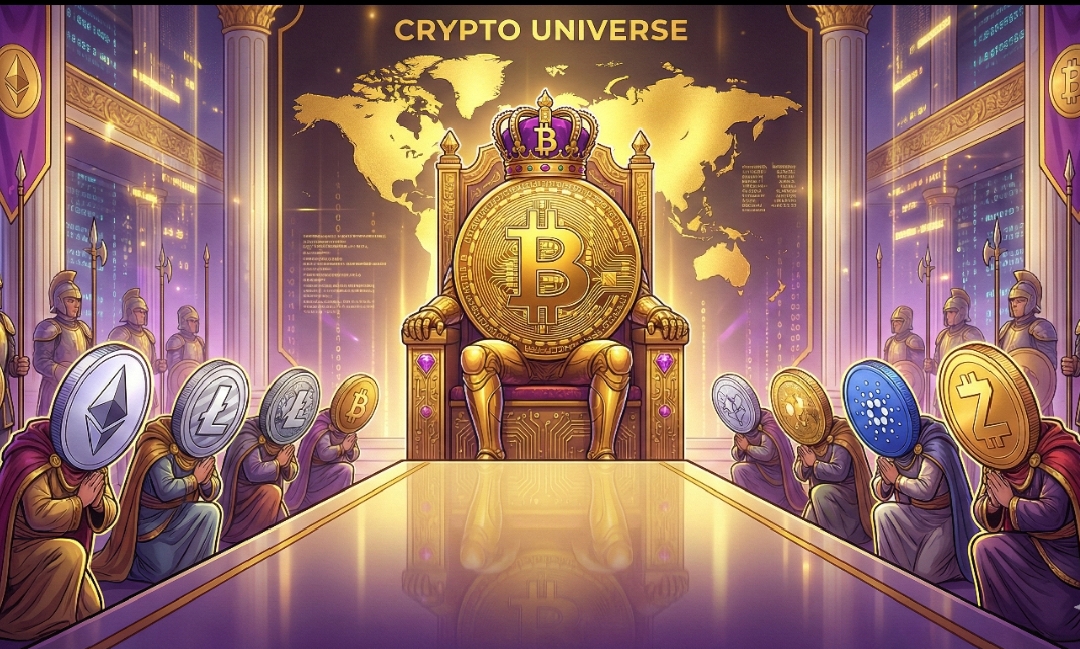
5 Things Which Make Bitcoin the New World’s Currency
The global financial system is undergoing one of the most significant transformations in history.
Traditional money systems, controlled by governments and central banks, are facing increasing pressure
due to inflation, debt crises, and loss of public trust. In this changing landscape, Bitcoin has emerged
as a revolutionary alternative.
Introduced in 2009 by an anonymous creator known as Satoshi Nakamoto, Bitcoin was designed as a
decentralized digital currency that operates without intermediaries. Over the years, it has evolved
from a niche technological experiment into a globally recognized financial asset. Today, many experts
believe Bitcoin has the potential to become the new world’s currency.
Below are five powerful reasons that explain why Bitcoin is increasingly viewed as the future of global money.
1. Decentralization: Financial Freedom Without Central Authority
One of the most important features that make Bitcoin unique is its decentralized nature. Traditional
currencies such as the US Dollar, Euro, or Rupee are controlled by central banks. These institutions
can print money, control interest rates, and influence the economy according to political or economic needs.
Bitcoin operates on a decentralized blockchain network maintained by thousands of computers worldwide.
No single government, company, or authority controls it. Transactions are verified through a consensus
mechanism, ensuring transparency and fairness.
This decentralization protects users from government overreach, currency manipulation, and account freezes.
It gives individuals complete ownership of their money, making Bitcoin a truly sovereign form of currency.
2. Limited Supply: A Strong Hedge Against Inflation
Fiat currencies suffer from one major flaw: unlimited supply. Governments can print money whenever they want,
which often leads to inflation and loss of purchasing power. History has shown that excessive money printing
destroys the value of currencies.
Bitcoin is fundamentally different. Its supply is capped at 21 million coins, a limit hard-coded into
its protocol. This scarcity makes Bitcoin deflationary by design.
Additionally, Bitcoin undergoes a process called “halving” approximately every four years, reducing the
reward for mining new coins. This controlled issuance creates long-term value and positions Bitcoin as
digital gold for the modern economy.
3. Borderless and Efficient Global Transactions
Sending money across borders through traditional banking systems is slow, expensive, and complicated.
International transfers can take days and involve high fees due to intermediaries like banks and payment processors.
Bitcoin enables instant, peer-to-peer transactions across the globe. Anyone with an internet connection
can send or receive Bitcoin without needing permission from banks or governments.
This borderless nature makes Bitcoin ideal for international trade, remittances, and global commerce.
It empowers people in underbanked and unbanked regions, providing access to a global financial system.
4. Transparency and Security Through Blockchain Technology
Trust is essential for any currency. Traditional financial systems rely on trust in institutions, which
have often failed due to corruption, fraud, or mismanagement.
Bitcoin replaces institutional trust with cryptographic security. Every transaction is recorded on a
public blockchain, creating a transparent and immutable ledger that anyone can verify.
Once a transaction is confirmed, it cannot be altered or reversed. The Bitcoin network has never been
hacked at the protocol level, making it one of the most secure financial systems ever created.
5. Growing Global Adoption and Acceptance
Bitcoin adoption has increased rapidly over the past decade. What was once dismissed as an experiment
is now recognized by major institutions, corporations, and even governments.
Large companies hold Bitcoin as a reserve asset, financial institutions offer Bitcoin-related services,
and millions of individuals use it as an investment and payment method.
In some countries, Bitcoin has been recognized as legal tender or regulated as a legitimate financial asset.
This growing acceptance strengthens Bitcoin’s position as a future global currency.
Challenges and the Future Outlook
Despite its strengths, Bitcoin faces challenges such as price volatility, regulatory uncertainty,
and scalability concerns. However, innovations like the Lightning Network are addressing these issues
by enabling faster and cheaper transactions.
Every transformative technology faces resistance in its early stages. Just as the internet reshaped
communication and commerce, Bitcoin has the potential to redefine money.
Conclusion
Bitcoin represents a new era of financial freedom, transparency, and global accessibility.
Its decentralized structure, limited supply, secure technology, and growing adoption make it a strong
candidate for becoming the new world’s currency.
While Bitcoin may not completely replace traditional currencies overnight, it is steadily building
an alternative global financial system. As the world becomes more digital and interconnected,
Bitcoin’s role in the future of money will continue to expand.
The transformation of global finance has already begun, and Bitcoin stands at the center of this revolution.