
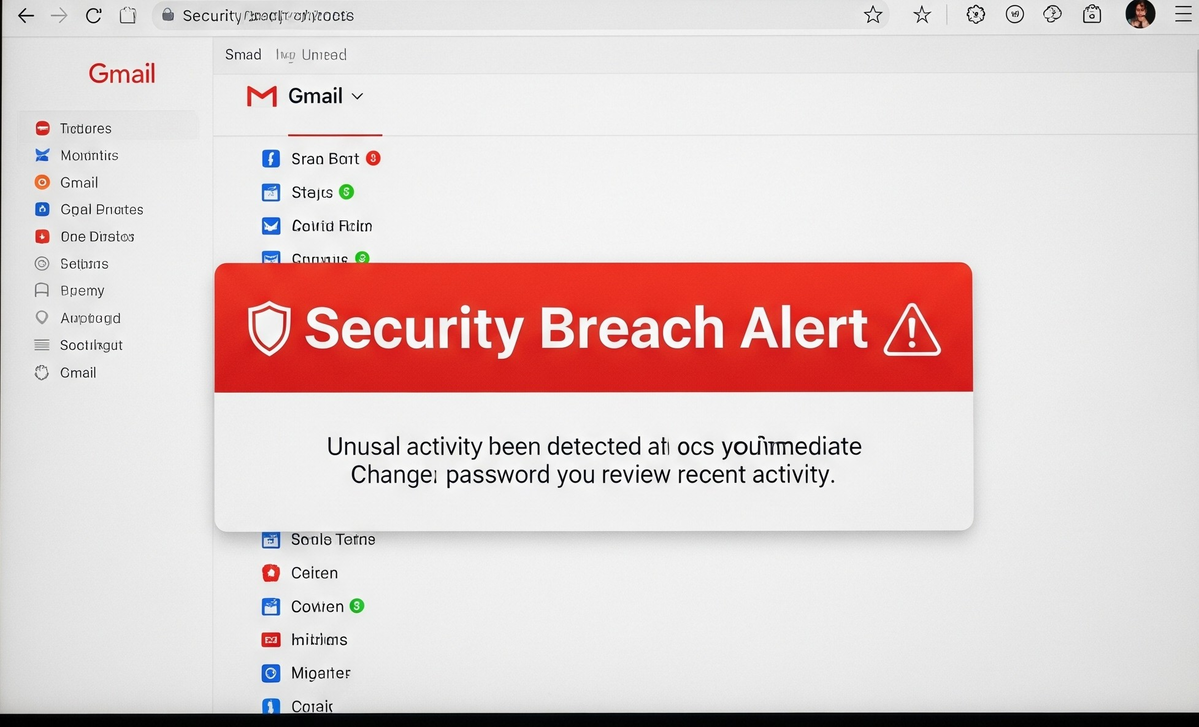
USA, September 2, 2025 – Gmail, the email platform trusted by more than 2.5 billion users worldwide, is dominating headlines in the United States this week. From an alarming Google security alert . to a massive data breach, to accusations that Gmail’s spam filters show political bias, the platform is facing its most intense scrutiny in years.
Gmail Data Breach 2025:

The breaking Gmail news today centers on a serious warning from Google. Cybersecurity researchers discovered that hackers exploited a breach tied to Salesforce, one of Google’s corporate partners. While Gmail passwords weren’t directly exposed, millions of names, email addresses, and business contacts were leaked.
This type of data may seem harmless at first glance, but experts caution that it’s a goldmine for criminals. With these details, hackers can craft highly convincing Gmail phishing attacks—posing as Google support staff, IT managers, or even trusted colleagues. Some victims have already reported receiving emails and phone calls urging them to “reset their Gmail account” or “verify their login credentials.”
The infamous hacking group ShinyHunters has been linked to this incident, raising concerns that a wave of Gmail scams could follow.
Google’s Emergency Guidelines for Users
To counter the threat, Google has urged users to act immediately and secure their accounts. The company has outlined six key steps every Gmail user should follow:
1. Enable two-factor authentication (2FA) to protect logins.
2. Switch to passkeys wherever possible, moving away from traditional passwords.
3. Avoid suspicious emails or phone calls requesting personal details.
4. Update recovery details like backup email and phone number.
5. Check Gmail account activity logs regularly for unauthorized access.
6. Report phishing attempts directly through Gmail’s built-in tools.
Google has stressed that the company will never call users for passwords or security codes, a red flag scammers are already exploiting.
Gmail Spam Filter Controversy: FTC vs Google
As if the data breach wasn’t enough, Gmail is also caught in a heated political storm. FTC Chairman Andrew Ferguson has publicly accused Gmail of partisan spam filtering, alleging that Republican campaign emails are being sent to spam more often than Democratic ones.
In a strongly worded notice, Ferguson warned Alphabet—the parent company of Google—that if this claim holds, it could represent a violation of federal rules against political discrimination.
Google, however, has denied the charge, insisting that Gmail’s spam filters rely only on objective signals like user complaints, bulk-sending behavior, and content quality. The company emphasized that its algorithms do not consider political affiliation when sorting emails.
Still, the allegation has sparked intense debate across the U.S. With elections approaching, even the perception of Gmail political bias could further polarize public opinion and raise questions about the role of big tech in democracy.
Why This Gmail Story Matters
1. Cybersecurity Risks for Billions
With Gmail serving as the backbone for personal and business communication, any breach—even if it doesn’t expose passwords—creates widespread vulnerability. Personalized Gmail phishing scams could lead to identity theft and financial fraud.
2. Trust in Digital Neutrality
At a time when Americans are sharply divided politically, accusations of Gmail bias hit a nerve. Whether true or not, they fuel distrust in how tech platforms handle sensitive communications.
3. Regulatory Pressure on Google
Between the security scare and the FTC warning, Google faces growing scrutiny. This could pave the way for stricter regulations not just for Gmail, but for email services and cybersecurity practices across the tech industry.
Expert Reactions
Cybersecurity analysts warn that the Gmail breach 2025 should be seen as a wake-up call. “This isn’t just about stolen email addresses—it’s about stolen trust,” explained Dana Walsh, a U.S.-based cyber expert. “When hackers impersonate Gmail support or a trusted colleague, people are more likely to fall for it. That’s what makes this so dangerous.”
Political experts, meanwhile, see the FTC’s move as a sign of what’s to come. “Even if Gmail spam filters are neutral, the allegation of political bias is damaging on its own,” said Professor Martin Cole, who specializes in election law. “Tech platforms will need more transparency if they want to retain public trust.”
Looking Ahead
For Gmail users, the message is clear: strengthen your account security and stay cautious. The days of ignoring phishing warnings are over. Cybercriminals are becoming more sophisticated, and Gmail’s massive user base makes it a prime target.
For Google, the twin challenges of data protection and political accountability highlight the growing burden of being a global digital giant. From protecting billions of inboxes against hackers to ensuring its systems remain neutral, Gmail now sits at the center of both cybersecurity and democracy debates.