
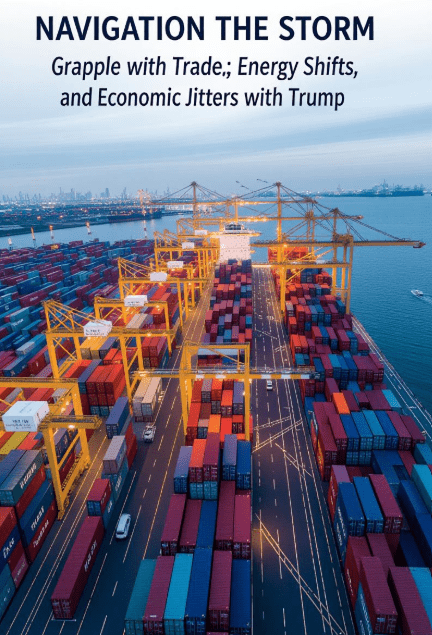
In the ever-turbulent world of global commodities, September 2025 has emerged as a whirlwind of policy pivots, geopolitical maneuvers, and market mood swings. From the humble coffee bean facing potential tariff relief in the U.S. to Europe’s accelerated push to sever ties with Russian energy supplies, and from crude oil’s precarious dip amid presidential commentary to gold’s resilient allure as a bulwark against uncertainty these threads are weaving a tapestry of economic adaptation. As investors eye the Federal Reserve’s measured steps on interest rates and OPEC’s production puzzles, one thing is clear: in an era defined by U.S.-China frictions, Ukraine’s ongoing conflict, and domestic political flux, no asset class operates in isolation. This article delves into these interconnected stories, exploring how they’re reshaping trade, energy security, and investor sentiment.
A Brew of Relief: U.S. Lawmakers Push to Shield Coffee from Tariff Crossfire
Picture this: It’s a crisp fall morning in Washington, D.C., and over steaming mugs of joe, lawmakers are hashing out a bipartisan bill that could spell sweet salvation for America’s favorite morning ritual. According to a recent deep dive by The Washington Post, a group of U.S. senators and representatives spanning both aisles has introduced legislation aimed at carving out an exemption for coffee imports from the escalating web of tariffs that have ensnared global trade since the Trump administration’s renewed aggressive stance on duties.
The proposal, dubbed the “Coffee Consumer Protection Act” in draft form, seeks to exclude coffee beans and related products from the 10-25% tariffs slapped on imports from major suppliers like Brazil, Vietnam, and Colombia. These duties, part of a broader “America First” trade recalibration, were initially intended to bolster domestic manufacturing but have rippled outward, jacking up costs for everyday goods. Coffee, that unassuming powerhouse fueling 62% of American adults daily (per National Coffee Association stats), has become an unintended casualty. Retail prices have climbed 15% year-over-year, with a pound of Arabica now fetching upwards of $8 at grocery stores a bitter pill for consumers already pinched by inflation’s lingering bite.
Proponents, led by Sen. Maria Cantwell (D-WA) and Rep. Dusty Johnson (R-SD) regions with robust coffee import hubs argue that tariffs on this essential commodity are counterproductive. “Coffee isn’t a luxury; it’s the lifeblood of our workforce,” Cantwell remarked in a floor speech last week. The bill highlights how duties exacerbate supply chain vulnerabilities, especially as climate change ravages Latin American harvests. Brazil, the world’s top producer, saw a 10% output drop in 2025 due to droughts, per USDA reports, pushing global prices to multi-year highs before tariffs layered on extra strain.

Critics, including some hardline trade hawks in the GOP, counter that exemptions undermine the leverage needed against unfair practices abroad. Yet, with midterm elections looming and consumer polls showing tariff fatigue 68% of voters oppose duties on food staples, according to a Pew Research survey the momentum feels real. If passed, the measure could pass the House by year’s end, offering a rare win for free-trade advocates in a protectionist climate. For roasters like Starbucks and Dunkin’, it’s a potential lifeline; for farmers in the Global South, a nod to equitable trade. As one industry lobbyist quipped to The Post, “In D.C., even politics needs its caffeine fix this could be the jolt we need.”
This coffee saga isn’t standalone; it’s symptomatic of a broader tariff thaw. Whispers in Capitol Hill corridors suggest similar carve-outs for bananas and cocoa might follow, signaling a pragmatic pivot as economic growth forecasts dip to 2.1% for 2026 (IMF estimates). In a world where trade wars cool faster than a forgotten latte, such exemptions could temper the inflationary fires without fully dousing the protectionist blaze.
Europe’s Energy Reckoning: Fast-Tracking the Russian LNG Divorce
Across the Atlantic, the European Commission is dialing up the heat on its energy independence drive, announcing plans to prohibit imports of Russian liquefied natural gas (LNG) by January 1, 2027 fully a year ahead of the original timeline. This bold acceleration, detailed in a Brussels briefing earlier this month, underscores the EU’s unyielding resolve to wean itself off Moscow’s fossil fuel grip amid the protracted Ukraine crisis.
The move comes as Europe’s gas markets stabilize post-2022’s energy shock, with LNG imports from rivals like the U.S. and Qatar surging 40% since then (Eurostat data). Yet, Russian LNG making up about 20% of the bloc’s seaborne supply has persisted as a loophole in broader sanctions. Commission President Ursula von der Leyen framed the ban as “a decisive step toward strategic autonomy,” citing not just security but environmental imperatives. “We’re not just cutting ties; we’re forging a greener future,” she declared, aligning the policy with the EU’s 55% emissions reduction target by 2030.
The earlier deadline slipping from 2028 reflects logistical feasibility and political will. Terminals in Germany and the Netherlands, once Russian-dependent, have diversified; Norway’s pipelines now cover 30% of demand. But challenges loom: Winter stockpiles are at 90% capacity, yet analysts warn of price spikes if Qatar or Australia can’t fill the void immediately. BloombergNEF projects a 5-7% uptick in European gas futures through 2026, potentially adding €50 billion to household bills continent-wide.
Geopolitically, it’s a gauntlet thrown at the Kremlin. With Russian exports rerouted to China and India up 25% YoY per IEA figures the ban squeezes Moscow’s $100 billion annual LNG revenue stream. Ukrainian officials hailed it as “poetic justice,” especially after Kyiv’s drone strikes on Russian energy infrastructure disrupted 15% of output last quarter. For Europe, it’s a high-stakes gamble: Success could cement energy sovereignty, but failure risks blackouts reminiscent of 2022’s misery.
This LNG pivot ripples into U.S.-EU relations too. American exporters, already shipping record 100 million tons annually, stand to gain billions. Yet, as one Brussels diplomat noted off-record, “It’s not altruism; it’s survival. Russia’s weaponized gas taught us that diversification isn’t optional it’s existential.” By 2027, the EU envisions a portfolio where renewables hit 45% of power mix, LNG from “friendly” sources 30%, and Russian influence nil. In the grand chessboard of energy geopolitics, Europe’s accelerated ban is a queen’s gambit risky, but potentially checkmate.
Oil’s Tightrope: Trump’s Words, Market Wobbles, and the Shadow of Sanctions
If coffee brews optimism and LNG bans signal resolve, crude oil tells a tale of precarious equilibrium. Brent crude futures tumbled to $67.44 per barrel last Friday, a 0.75% slide or 51 cents lower, while West Texas Intermediate (WTI) settled at $63.57 mirroring the dip. This softening, against a backdrop of year-to-date gains now eroded to just 2%, owes much to an unlikely catalyst: a off-the-cuff remark from President Donald Trump.
Speaking at a Mar-a-Lago fundraiser, Trump posited that “surging oil prices, not more sanctions, are the real hammer on Putin.” Wait did he mean low prices? In a classic Trumpian twist, aides later clarified he was underscoring how depressed crude levels could economically throttle Russia more effectively than diplomatic cudgels. The comment, amplified across cable news, spooked traders already jittery from mixed signals. “Markets hate uncertainty, and Trump delivers it by the barrelful,” chuckled a veteran oil trader on CNBC.

The price retreat wasn’t isolated. The U.S. dollar’s bull run bolstered by robust August jobs data (adding 200,000 roles) made dollar-denominated oil pricier for overseas buyers, curbing demand. Add in ballooning U.S. inventories, up 3.2 million barrels last week per EIA, and you’ve got a recipe for caution. OPEC+, meanwhile, stuck to its gradual output hike adding 180,000 barrels per day in October aiming to balance supply without flooding the market. “They’re threading the needle,” says Fatih Birol of the IEA, “but one slip, and prices crater.”
Lurking in the shadows: Ukraine’s audacious strikes on Russian refineries. Kyiv’s drones have idled 10% of Moscow’s downstream capacity since July, per satellite intel from Orbital Insight, forcing Russia to export raw crude rather than value-added products. This has paradoxically stabilized prices disrupted supply offsets ample global stocks. Yet, traders whisper of escalation risks; a broader conflict could spike Brent toward $80, or conversely, if peace talks (rumored for November) materialize, sub-$60 territory beckons.
For Russia, Trump’s low-price thesis stings. With Urals crude trading at a $15 discount to Brent, revenues are down 18% YoY, straining war coffers. Sanctions have bitten export bans to Europe halved flows but as Trump implies, market forces might do the dirtiest work. As one Moscow analyst (speaking anonymously) put it, “Oil at $60 is our silent sanction Putin’s worst nightmare without a single G7 vote.”
In this volatile vat, speculators are hedging bets: Long positions in WTI futures hit a three-month low, per CFTC data. For consumers, it’s a mixed bag cheaper gas at the pump (national average $3.12/gallon) eases wallets, but airlines and shippers grumble over margin squeezes. Oil’s dance, it seems, is less a waltz than a wary tango, with every step shadowed by geopolitics and green transitions.
Gold’s Golden Paradox: Safe Haven in a Sea of Caution
Amid oil’s stumbles and energy realignments, gold gleams as the perennial refuge. Spot prices dipped 1.2% to $2,512 per ounce last week the first weekly loss in a month as the mighty dollar exerted its gravitational pull. Yet, strip away the froth, and bullion’s year-to-date surge of 18% underscores its enduring appeal. Why the resilience? Cue the Federal Reserve’s dovish-yet-cautious tango on rate cuts

Jerome Powell’s Jackson Hole redux last month was a masterclass in ambiguity: Inflation’s “disinflationary path” warrants easing, but labor market cracks and fiscal wildcards demand restraint. Markets now price in a 75% chance of a 25-basis-point trim in November, down from 90% pre-speech. “The Fed’s playing chess while the world’s on fire,” quips Goldman Sachs’ chief economist. Political tempests impeachment whispers around key figures, Supreme Court battles over debt ceilings compound the unease, as does global instability from Middle East flare-ups to Taiwan Strait saber-rattling.
Enter gold: In times of fiat fragility, it shines. Central banks, led by China’s PBOC (adding 15 tons in August), have hoarded 1,200 tons YTD, per World Gold Council. Retail investors, too, flock to ETFs like GLD, inflows up 12% amid election anxiety. “It’s not just hedges; it’s therapy,” says a New York bullion dealer. Legal uncertainties ongoing probes into 2020 election interference, per DOJ filings further fuel the flight to tangibles.
Parallels to oil abound: Just as low crude pressures autocrats, gold’s steadiness counters dollar dominance. With U.S. debt at 130% of GDP (CBO projections), fiat skeptics see bullion as the ultimate diversifier. Forecasts vary JPMorgan eyes $2,700 by year-end if cuts materialize, while bears like Citi cap it at $2,400 on growth rebounds. Either way, in a portfolio pockmarked by volatility, gold’s whisper is louder than ever: Stability isn’t given; it’s guarded.
Tying the Knots: Commodities in the Crosshairs of Tomorrow
As these narratives converge, a mosaic emerges: Trade exemptions like coffee’s could soften tariff edges, fostering fragile alliances; Europe’s LNG sprint accelerates the great energy divorce, bolstering security at a premium; oil’s ebb, prodded by presidential prose and proxy wars, tests resilience; and gold, ever the sentinel, absorbs the shocks. In 2025’s cauldron where Fed whispers sway billions and Trump’s tweets topple tickers commodities aren’t mere trades; they’re telltales of our fractured globe.
For policymakers, the lesson is stark: Interdependence demands dexterity. Exempt a bean, ban a barrel, and watch the dominoes. Investors, heed the signals diversify, for the storm shows no signs of clearing. As autumn leaves fall, so too might old certainties, leaving us to brew, burn, and bet on what rises from the ashes. In this grand bazaar, adaptation isn’t optional; it’s the only currency that endures.