
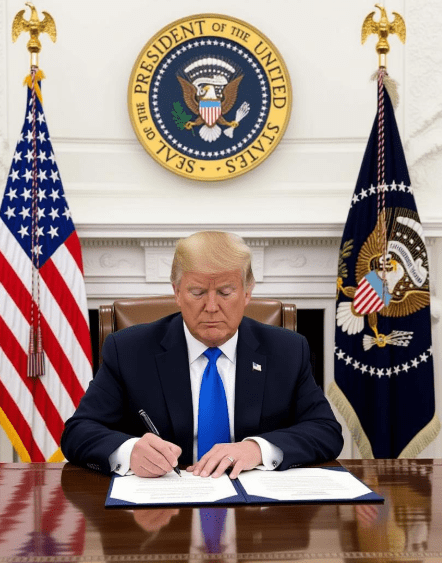
On September 19, 2025, President Donald Trump signed a proclamation imposing a $100,000 annual fee on H-1B visa applications, a move that could significantly impact the U.S. tech industry, which heavily depends on skilled workers from countries like India and China.
U.S. Commerce Secretary Howard Lutnick, speaking at a press briefing in the Oval Office, stated that major tech companies were informed of the new fee. “We’ve talked to all the big companies, and they’re on board,” Lutnick said, emphasizing the administration’s push to prioritize American workers. “Train our recent graduates from great U.S. universities. Stop bringing in people to take American jobs.”
The H-1B visa program, critical to the tech sector, supports about 85,000 temporary foreign workers annually in specialized fields, with roughly two-thirds of these roles being computer-related. In the first half of 2025, Amazon secured over 10,000 H-1B approvals, while Microsoft and Meta each obtained more than 5,000. The program also supports engineers, educators, and healthcare professionals.
The new fee has sparked debate. Critics, including some U.S. tech workers, argue the H-1B program suppresses wages and sidelines Americans. Supporters, like Tesla CEO Elon Musk a former H-1B visa holder say it’s essential for filling talent gaps and maintaining U.S. competitiveness. Deedy Das, a partner at Menlo Ventures, warned on X that the fee could deter global talent, stating, “If the U.S. stops attracting the best minds, it risks losing its edge in innovation and economic growth.”
The fee could hit smaller tech firms and startups hardest, raising costs significantly. Lutnick framed it as a way to ensure only “top-tier” talent is hired, saying, “If they’re not valuable enough, companies will hire Americans instead.” Currently, H-1B fees, paid by employers, include a lottery entry fee and additional costs totaling a few thousand dollars for visas lasting three to six years.
Legal experts question the proclamation’s validity. Aaron Reichlin-Melnick of the American Immigration Council noted on Bluesky that the executive branch lacks authority to impose such a high fee, as Congress only permits fees to cover processing costs.
This move aligns with Trump’s broader immigration policies, including a recent $15,000 bond program for tourist and business visas from certain countries and a June 2025 travel ban targeting 19 nations. Previous attempts to restrict H-1B visas during Trump’s first term were struck down