
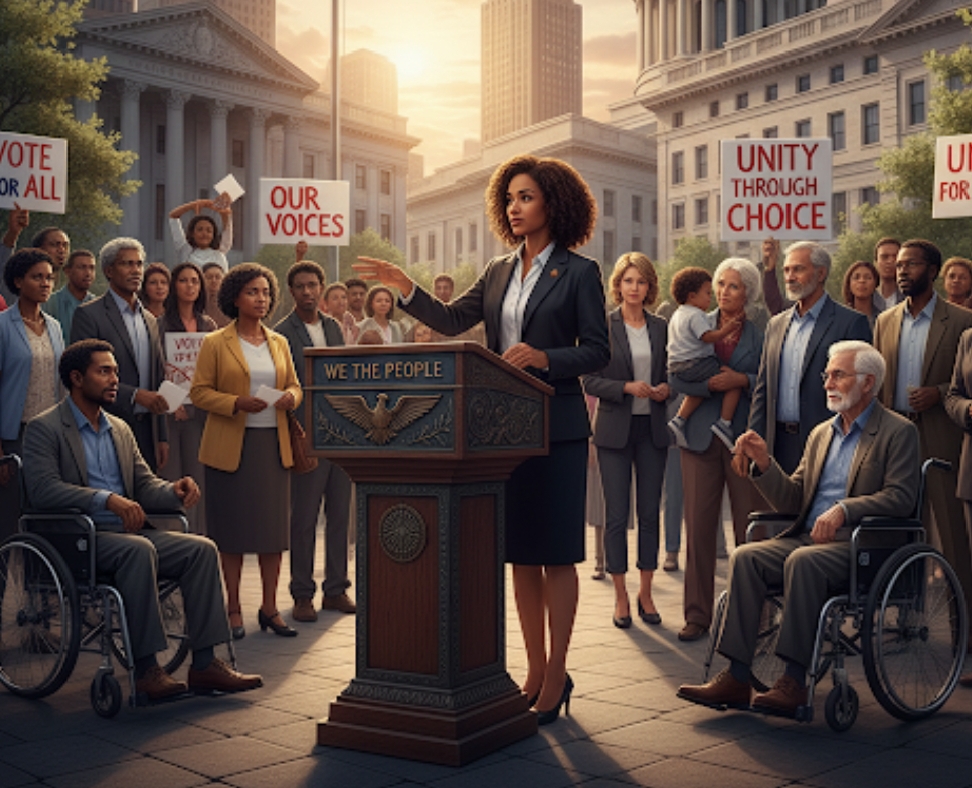
In the heart of the 21st century, as we approach the end of 2025, American democracy stands at a crossroads shaped profoundly by the digital revolution. From the founding fathers’ quill pens to today’s smartphones and social media platforms, the way Americans engage with their government, vote, and voice opinions has transformed dramatically. This article delves into the depths of how digital technologies have reshaped democracy in the United States, exploring both the empowering opportunities and the daunting challenges they present. Targeted at an American audience, we’ll examine this evolution through historical context, current realities, and future implications, all while emphasizing the unique spirit of resilience and innovation that defines the nation.
Historical Foundations and the Digital Shift
American democracy traces its roots to the late 18th century, with the Declaration of Independence in 1776 and the Constitution in 1787 laying the groundwork for a representative government. Back then, information flowed slowly via printed newspapers, town hall meetings, and horseback messengers. Fast forward to the 20th century, radio and television brought political messages directly into living rooms, as seen in Franklin D. Roosevelt’s fireside chats and John F. Kennedy’s televised debates. These media advancements democratized access to information, allowing citizens from coast to coast to stay informed without leaving their homes.
However, the true paradigm shift occurred with the advent of the internet in the 1990s. Suddenly, information became instantaneous and global. The 2008 presidential election marked a pivotal moment when Barack Obama’s campaign harnessed social media like Facebook and Twitter (now X) to mobilize young voters and raise funds. This digital strategy not only helped secure his victory but also set a precedent for future campaigns. By 2016, Donald Trump’s masterful use of Twitter to bypass traditional media outlets demonstrated how digital tools could amplify unfiltered messages, reaching millions directly. This era highlighted democracy’s adaptability, where platforms enabled grassroots movements like the Tea Party or Occupy Wall Street to gain traction overnight.
Today, in 2025, digital integration is deeper than ever. Apps like Vote.org simplify voter registration, while blockchain experiments in states like West Virginia aim to secure mobile voting for overseas military personnel. Yet, this evolution isn’t without its ironies. The same tools that empower also fragment, creating echo chambers where algorithms feed users content that reinforces existing beliefs, potentially eroding the common ground essential for democratic discourse.
The Empowerment of the Individual Voter
One of the most positive aspects of digital democracy is the empowerment it offers to individual Americans. Gone are the days when political participation required attending rallies or writing letters to editors. Now, a single tweet can spark national conversations, as evidenced by the #MeToo movement in 2017, which originated online and influenced policy on sexual harassment nationwide. For everyday citizens, platforms like Reddit’s r/politics or TikTok’s political content creators provide forums to discuss issues ranging from healthcare reform to climate change.
In terms of voting, digital tools have made the process more accessible. Online voter registration is available in most states, reducing barriers for busy professionals, students, and those with mobility issues. During the 2020 election, amid the COVID-19 pandemic, mail-in voting surged, supported by digital tracking systems that allowed voters to monitor their ballots’ status via apps. This not only increased turnout but also highlighted technology’s role in maintaining democratic processes during crises.
Moreover, data analytics have revolutionized campaigning. Political parties use big data to target ads precisely, tailoring messages to specific demographics. For instance, a farmer in Iowa might see ads about agricultural subsidies, while a tech worker in Silicon Valley gets content on innovation policies. This personalization makes politics feel more relevant, potentially boosting engagement among apathetic voters. Educational resources abound too—websites like Ballotpedia offer nonpartisan breakdowns of candidates and propositions, arming voters with knowledge to make informed decisions.
Yet, this empowerment comes with a caveat: digital literacy is crucial. Not all Americans are equally equipped to navigate online information. Older generations or those in rural areas with limited broadband access might miss out, exacerbating divides. Initiatives like the FCC’s Affordable Connectivity Program aim to bridge this gap, but progress is uneven.
Challenges: Misinformation, Privacy, and Polarization
While digital tools enhance democracy, they also pose significant threats. Misinformation spreads like wildfire on social media, as seen in the 2020 election with false claims about voter fraud leading to the January 6th Capitol riot. Fact-checking sites like Snopes and PolitiFact work tirelessly, but the sheer volume of content overwhelms them. Algorithms prioritize engagement over accuracy, often amplifying sensational falsehoods over nuanced truths.
Privacy concerns loom large as well. Political campaigns collect vast amounts of personal data through apps and websites, raising questions about consent and security. The Cambridge Analytica scandal in 2018 revealed how data harvested from Facebook influenced voter behavior, prompting calls for stricter regulations like the California Consumer Privacy Act. Americans value their privacy, rooted in the Fourth Amendment, yet balancing it with free speech remains contentious.
Polarization is another digital byproduct. Social media bubbles isolate users from opposing views, fostering extremism. Studies from Pew Research Center show that partisan divides have widened since the internet’s rise, with Americans increasingly viewing the other side as threats rather than compatriots. This erodes compromise, essential for a functioning Congress, leading to gridlock on issues like gun control and immigration reform.
Cybersecurity adds another layer of vulnerability. Foreign actors, as in Russia’s 2016 interference, exploit digital platforms to sow discord. The U.S. government’s response, through agencies like CISA (Cybersecurity and Infrastructure Security Agency), includes bolstering election infrastructure, but the cat-and-mouse game continues.
Future Prospects: Innovations and Reforms
Looking ahead, the future of American democracy in the digital age brims with potential. Artificial intelligence could revolutionize fact-checking, with AI tools scanning content in real-time to flag inaccuracies. Virtual reality town halls might allow citizens to interact with representatives immersively, transcending geographical barriers. Blockchain could ensure tamper-proof voting systems, increasing trust in elections.
Reforms are underway. Bipartisan efforts in Congress aim to regulate social media giants, inspired by the EU’s Digital Services Act. Proposals include mandating transparency in algorithms and data practices. Education plays a key role too—integrating digital literacy into school curricula prepares future generations to discern truth from fiction.
Grassroots innovations shine brightly. Crowdfunding platforms like GoFundMe support local political causes, while apps like Countable let users track bills and contact lawmakers easily. These tools embody the American ethos of self-reliance and community action.
However, success hinges on collective will. Americans must demand accountability from tech companies and politicians alike. Civic engagement, both online and offline, remains the bedrock. As Abraham Lincoln said, democracy is “government of the people, by the people, for the people.” In the digital era, this means harnessing technology to amplify voices while safeguarding against its pitfalls.
Conclusion
The evolution of American democracy in the digital age is a testament to the nation’s enduring adaptability. From empowering voters to challenging truths, digital tools have redefined participation. As we navigate this landscape in 2025 and beyond, the key lies in balancing innovation with integrity. By fostering informed, inclusive discourse, Americans can ensure their democracy not only survives but thrives in the pixels and bytes of tomorrow. This journey requires vigilance, education, and unity—qualities that have always defined the American spirit.