
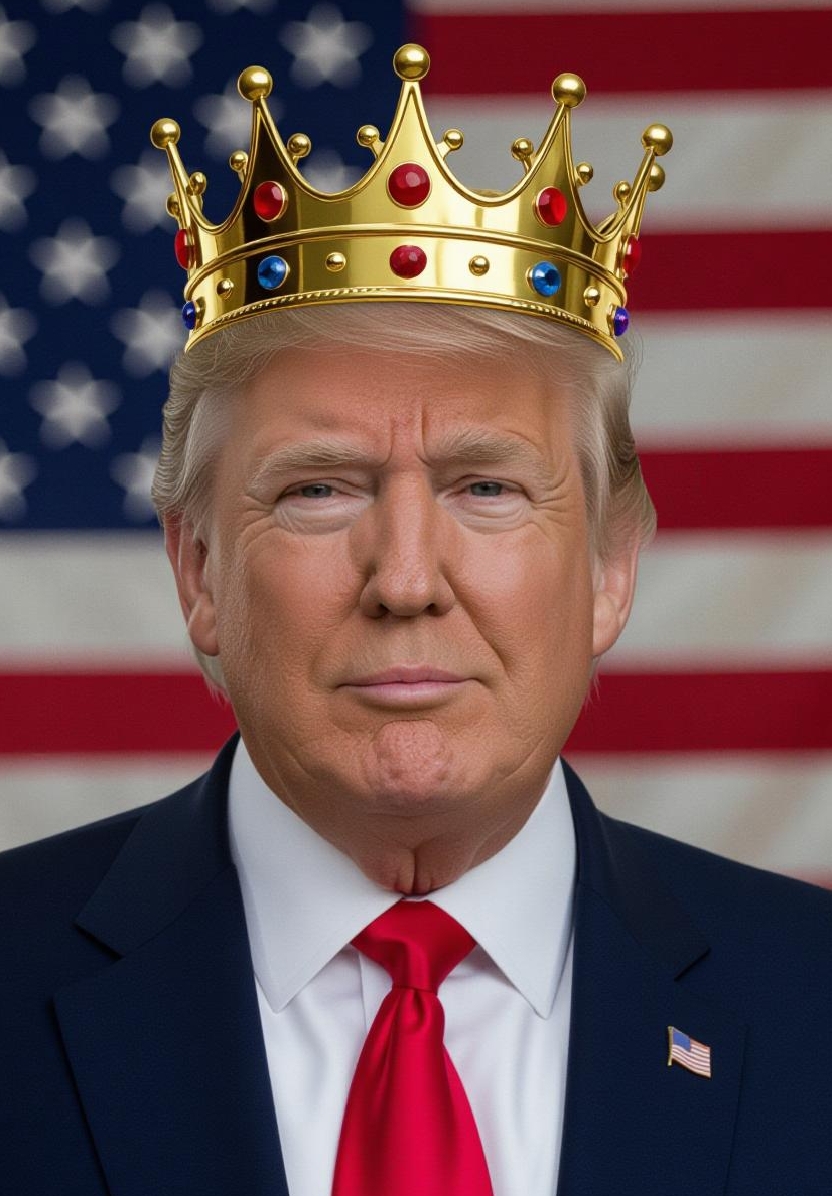
Mass Mobilisation Begins: “No Kings” Protests Against President Trump Sweep the Globe
By Deepak
The first of what organisers expect to be more than 2,600 coordinated protests began on Saturday in the United States and beyond, marking a major mobilisation against President Donald Trump’s policies on immigration, education and security. The movement argues that the country is being steered toward autocracy through rapid and sweeping changes.
These protests both large and small in cities, suburbs and rural towns across the U.S. follow earlier mass demonstrations in June and reflect a broad frustration among opponents of the agenda the Trump administration has pursued with unusual speed since January.
The day’s events launched internationally, with a few hundred demonstrators outside the U.S. embassy in London and similar gatherings in Madrid and Barcelona.
In Northern Virginia by Saturday morning, many protesters were walking overpasses above roads into Washington, D.C., and hundreds gathered near the circle by , at the location where President Trump is reportedly considering a new arch over the bridge linking to the .
Since President Trump’s inauguration ten months ago, his administration has ramped up immigration enforcement, cut back on the size of the federal workforce and pushed to reduce funding for elite universities over issues like pro-Palestinian campus protests, campus diversity initiatives and transgender rights. In some major cities, residents have seen National Guard troops deployed by the president, purportedly to assist immigration agents or help combat crime.
“There is nothing more American than saying ‘we don’t have kings’ and exercising our right to peacefully protest,” said , a co-founder of , the progressive group spearheading the No Kings demonstrations.
President Trump has responded little about Saturday’s protests. However, in an interview with aired on Friday he said jokingly, “they’re referring to me as a king I’m not a king.”
According to Greenberg, over 300 grassroots organisations took part in organising Saturday’s marches. The (ACLU) has provided legal training to tens of thousands of volunteers who will serve as marshals at the events, and those volunteers have also been trained in de-escalation techniques. No Kings advertisements and informational campaigns have spread widely across social media to boost turnout.
Prominent political figures including , a progressive independent senator, and , a progressive Democratic congresswoman, have backed the marches. Also lending support was , former Secretary of State from the 2016 election. A broad array of celebrities have also voiced support for the movement.
Back in June, more than 2,000 No Kings protests took place nationwide across the country, held on the same day that President Trump celebrated his 79th birthday and presided over a military parade in Washington.
Republican Response: “Hate America” Labels and Allegations of Radicalism
On Friday, Speaker of the U.S. House of Representatives and a Republican, joined other GOP officials in attacking the movement. “Tomorrow the Democrat leaders are going to join for a big party out on the National Mall,” Johnson said at a press conference. “They’re going to descend on our Capitol for their much anticipated so-called No Kings rally. We refer to it by its more accurate description: the hate America rally.”
Other Republicans have accused the protests of inciting political violence, especially in the wake of the September assassination of activist , a close confidant of President Trump and key administration figure.
Why It Matters: A Mass Display of Dissent
According to , a professor at in Washington, D.C., and author of several books on American activism, Saturday’s events could become the largest protest turnout in modern U.S. history. She estimated more than 3 million people might participate based on registrations and participation in June.
“The main point of this day of action is to create a sense of collective identity among all the people who feel that they are being persecuted or are anxious due to the Trump administration and its policies,” Fisher said. “It’s not going to change Trump’s policies overnight. But it might embolden elected officials at all levels who oppose Trump.”
Movement Origins and Message
The No Kings protests are organised under the banner of the (standing for “50 states, 50 protests, one movement”), together with Indivisible and more than 100 allied organisations. The movement positions itself as a direct reaction to what it describes as authoritarian practices by the Trump administration, including mass deportations, suppression of dissent, and use of security forces in domestic settings.
The name “No Kings” reflects the belief among organisers and participants that the United States should not tolerate one-person rule or monarchical behaviour in a democracy. One organiser website states: “No thrones. No crowns. No kings.”
Inside the Protest Day
Across all 50 states, protests were scheduled in thousands of towns and cities. In many locations, participants were urged to wear yellow to symbolise unity and to create a visual statement of solidarity borrowing from other pro-democracy movements globally.
In major cities such as , the demonstration started around 10 a.m., with marchers gathering at a park, moving along major thoroughfares, ending in a rally venue. Organisers emphasised peaceful protest and provided volunteer marshals in bright vests trained in de-escalation and crowd safety.
Organisers stressed that no weapons should be brought to events and that participants should commit to lawful behaviour and de-escalation of confrontations.
Significance and Outlook
The mobilisation represents a high point of public outcry against President Trump’s second term agenda. It shows that protest culture in the U.S. has scaled up not only in size but in coordination, and reflects deepening concerns about democratic norms, power consolidation and civil liberties. The protests may not immediately change policy, but they signal a willingness among citizens to act, organise and express dissent nationally and globally.
In turn, the Trump administration and its supporters view the movement as undermining patriotic values and national cohesion, framing it as extremist or un-American. How these tensions play out in the coming months will shape the landscape of American political activism and governance.
Your point of view caught my eye and was very interesting. Thanks. I have a question for you.