
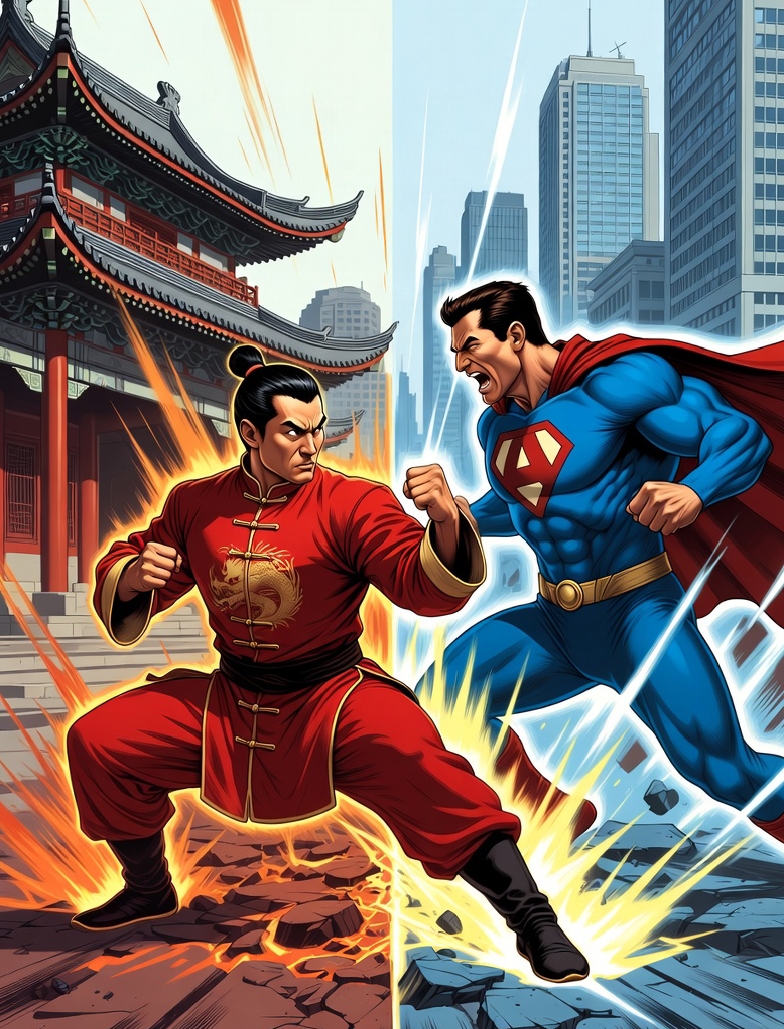
US vs China: The Digital Fight of 2025 – AI, Chips, and the New Cold War
As November 2025 unfolds, the US-China digital rivalry intensifies into a full-spectrum battle for technological supremacy. From AI chip bans to quantum leaps, this clash is redrawing global power lines.
1. The Spark: From Trade Tensions to Tech Blockade
The roots trace back to the Trump era’s initial tariffs, but 2025 marks a pivotal escalation. By mid-year, US export controls peaked with bans on even “specialized AI chips” compliant with prior rules, effectively sealing off advanced hardware to China.0 This “choke point” strategy targets semiconductors the lifeblood of AI, autonomous systems, and military tech aiming to hobble Beijing’s ambitions.
China’s response? Acceleration of the Made in China 2025 initiative, funneling hundreds of billions into domestic chip production.13 State-backed firms like SMIC and Huawei now produce 7nm chips using outdated tools, albeit inefficiently.4 The November 7-10 Trump-Xi summit in Busan yielded a fragile truce: suspended tariffs, port fees, and entity list sanctions for one year, but underlying frictions persist.15
This tit-for-tat has birthed alliances: The US-led “Chip 4” (with Japan, Taiwan, South Korea) coordinates supply chains, while China’s Digital Silk Road courts partners in Africa and Asia.0 The result? A “silicon schism” fragmenting global tech into incompatible blocs.1
2. Battleground AI: Chips, Models, and Compute Power
US Dominance in Hardware, China’s Software Surge
AI is the crown jewel. Nvidia’s GPUs remain the gold standard, powering everything from ChatGPT to self-driving cars. US controls have slashed China’s access, limiting Huawei to just 200,000 AI chips in 2025 a fraction of Nvidia’s output.9 Yet, Beijing innovates around barriers: DeepSeek’s R1 model, launched January 2025, rivals OpenAI’s o1 using only $6 million and fewer chips, trained by young Chinese graduates.38
China’s edge? Scale and energy. Huawei’s Ascend clusters, built on SMIC’s 7nm process, form massive AI supercomputers fueled by cheap domestic power.4 By November, Alibaba and DeepSeek released models trained on homegrown chips, decoupling from US tech.24 Meanwhile, Trump’s “Stargate” venture with OpenAI and SoftBank eyes a $500 billion AI push.3

Philosophical Clash: Sprint vs. Marathon
America’s “sprint” agile, venture-fueled breakthroughs like GPT-4 contrasts China’s “marathon” of state orchestrated endurance.7 Beijing controls 70% of rare earths and 99% of heavy variants, cornering semiconductor inputs.7 US firms like AMD snag $3.5 billion in AI orders, but China’s self-sufficiency drive surges demand for locals like Cambricon.
3. Beyond AI: Quantum, Cyber, and Supply Chain Shadows
The fight spills into quantum tech. China boasts the world’s largest quantum network (over 10,000 km) and two satellites enabling secure comms to allies like South Africa.23 Beijing outspends the US 2:1 on quantum R&D, deploying a domestic superconducting computer surpassing some American prototypes.23 The US counters with export bans on quantum tools, but China’s lab-to-deployment speed alarms Washington.
Cyber domains amplify tensions. US scrutiny of Chinese firms in critical minerals like Australia’s rare earths aims to diversify away from Beijing.5 China, in turn, eyes US software in exports, with Trump mulling curbs on laptops and jet engines using American code.1721 Military angles? China’s hypersonic missiles and stealth drones challenge US intel, forcing massive counter-investments.22
| Domain | US Strength | China Strength | 2025 Impact |
|---|---|---|---|
| AI Chips | Nvidia dominance; export bans | Huawei clusters; DeepSeek R1 | China lags 2-5 years12 |
| Quantum | Private investment; alliances | Network scale; 2x US spending | Satellites to allies23 |
| Semiconductors | Chip 4 alliance; TSMC | 70% rare earths; SMIC 7nm | Global decoupling6 |
| Cyber/Military | Intel edge; software curbs | Hypersonics; drone swarms | Supply chain vulnerabilities22 |
4. Global Ripples: Fragmentation and the Third Way
The digital fight forces nations to choose sides. South Korea, reliant on China for 83% of chip raw materials, treads carefully.5 India and Malaysia face US chip caps unless regulations ease, benefiting Nvidia but squeezing access.10 Europe’s semiconductor dependency on Asia heightens vulnerabilities, while biotech sees US early funding drop 65% amid long horizons.23
Costs mount: Higher prices, slowed innovation, and bifurcated standards. Yet, opportunities arise AMD’s AI gains, China’s domestic boom.6 As Peking University’s 2D transistors promise 40% faster chips, the race innovates in shadows.11